The different types of filters: HEPA, ozone, ionizer
The HEPA filter (High Efficiency Particulate Air)
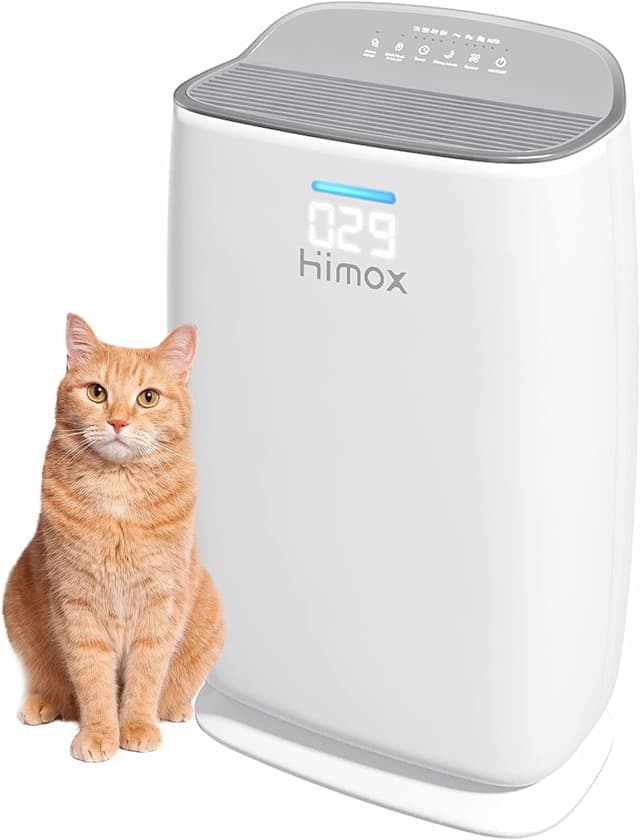
The HEPA (High Efficiency Particulate Air) filter is the international standard in air filtration: it is a high-efficiency mechanical filter designed to capture fine particles, allergens, and certain airborne microorganisms present in indoor air. The European standard EN 1822 classifies HEPA filters from H10 to H14. The H13 level, used by HIMOX, guarantees the capture of at least 99.97% of particles of 0.1 microns and above. This is the same level as filters used in hospitals and industrial clean rooms.
A certified EN 1822 H13 HEPA filter captures fine particles, allergens, spores, pet dander, and even some encapsulated viruses. See our selection of the best HEPA purifiers to compare models. It does not treat gases or odors on its own, which is why it is often paired with an activated carbon filter.
Lifespan and replacement: an H13 HEPA filter generally needs to be replaced every 6 to 12 months depending on usage intensity and ambient air quality. Visible signs (darkening, persistent odor despite filtration) or a drop in performance (reduced airflow) indicate that replacement is needed. The activated carbon filter, for its part, becomes saturated more quickly (3 to 6 months) as it absorbs gas molecules and eventually loses its ability to capture new ones.
The ozone generator
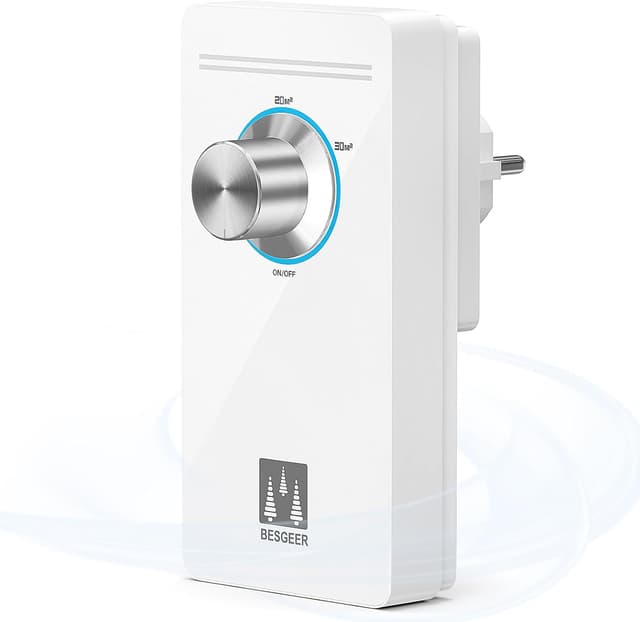
Ozone (O3) is a powerful oxidizer that reacts chemically with organic pollutants, bacteria, and mold to break them down. The byproducts of ozone's reaction with formaldehyde and benzene are carbon dioxide, water, and oxygen. Ozone then naturally decomposes back into oxygen at room temperature.
Important precaution: ozone at high concentrations is irritating to the respiratory tract. Ozone generators must be used in unoccupied rooms. The residual odor after a treatment cycle dissipates gradually, with manufacturer Yuede indicating a duration of 20 to 50 minutes depending on the size of the room and its ventilation. No precise scientific data currently exists to narrow this range for all configurations.
The ionizer
The ionizer emits negative ions that attach to suspended particles, making them heavier and causing them to fall. It often complements HEPA filtration without replacing the physical filter. Both products presented in this guide incorporate an ionizer.
The CADR: the objective indicator you need to know
The CADR (Clean Air Delivery Rate) measures the volume of clean air delivered by a purifier in m³/h. It is the international reference metric for objectively comparing the real-world effectiveness of devices, independent of marketing claims. Neither the Yuede nor the HIMOX H-04 publish an official CADR value in their available technical specifications, making direct comparison on this criterion difficult. For an informed purchase, prioritize models that publish this data.